That gap is the most telling number in enterprise AI right now. Camunda's 2026 State of Agentic Orchestration and Automation report, based on a survey of 1,150 senior IT decision-makers and enterprise architects (fieldwork from September to October 2025), found that 71% of organizations use AI agents, but only 11% of agentic use cases reached production in the previous year. The bottleneck isn't model quality. It isn't talent. It's governance and integration.
For mid-market IT leaders in Bulgaria and the EU weighing their next move on AI agents, this distinction matters more than any product announcement. The question isn't whether agents work; it's whether they can work inside the processes your business actually runs on, with the controls your regulators and customers expect.
The Camunda data paints a specific picture. 48% of organizations say their agents operate in silos, disconnected from end-to-end business processes. 80% report that most of their agents are chatbots or assistants rather than participants in mission-critical work. And 73% acknowledge a gap between their agentic AI vision and current reality.
These numbers describe a pattern Kondevs sees repeatedly in integration engagements: teams build impressive agent prototypes that live outside the governed process layer. No retry on failure. No record of who approved what. No SLA, no escalation path, no audit trail. So the prototype stays a demo.
The fix isn't more AI. It's more process engineering.
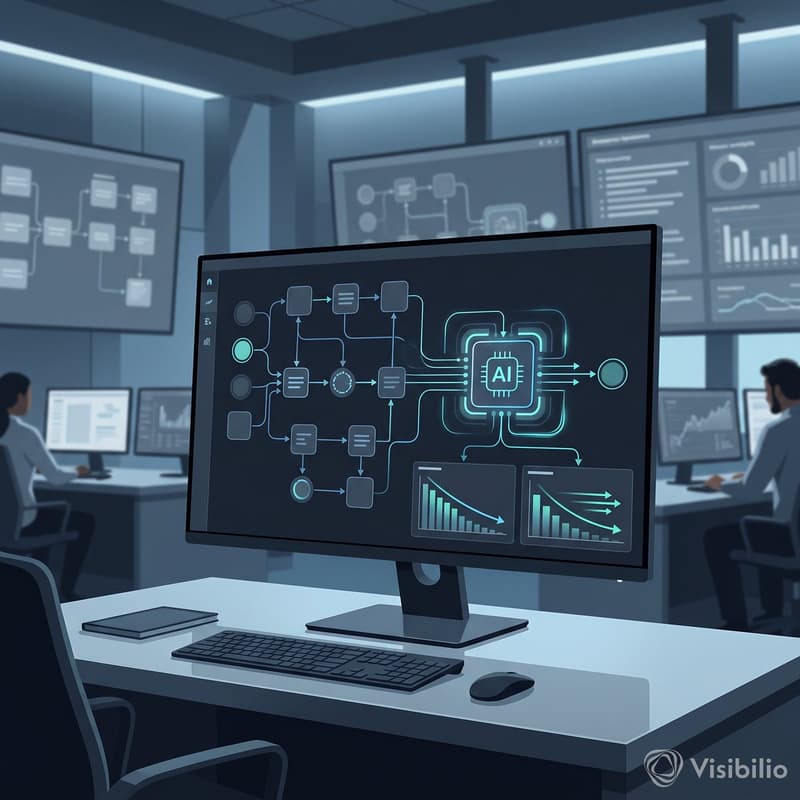
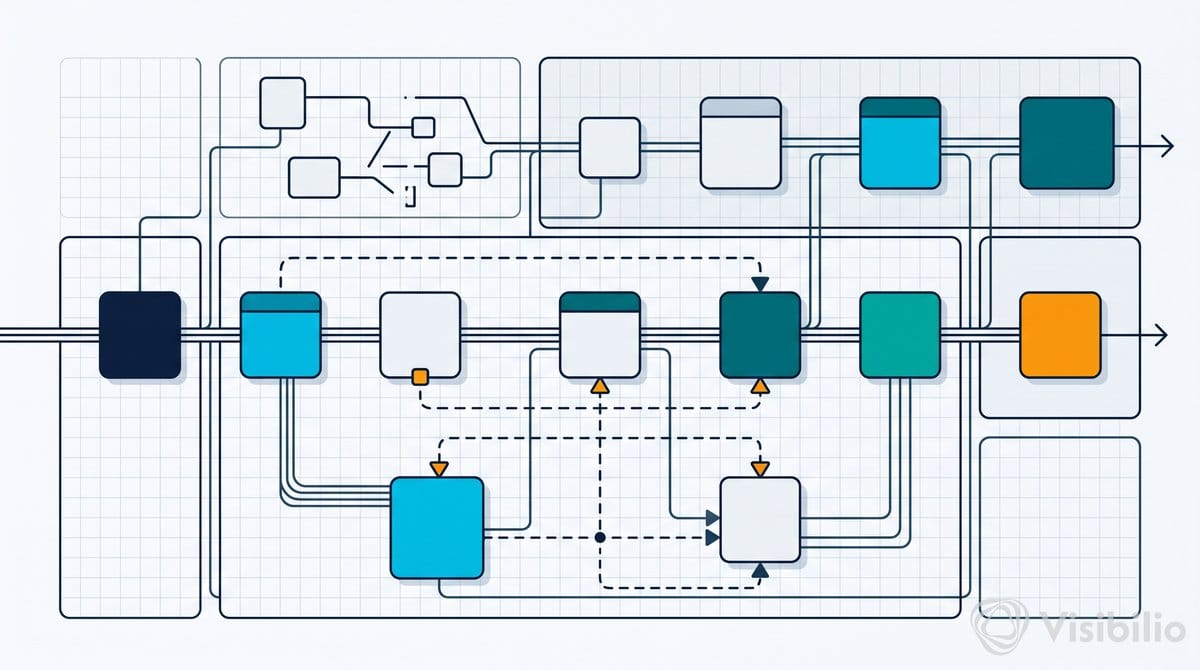
The architecture pattern emerging from real deployments: don't replace your BPM engine with an autonomous agent. Place the agent inside the governed workflow as one more endpoint, the same way you'd treat an API call to your ERP or a human approval task.
Audi's implementation, presented at CamundaCon 2026, illustrates this. In their customer-message scenario, an agent reads and classifies incoming messages, then routes them into a process. But the agent doesn't autonomously send replies. Human involvement is expected for customer replies, at least initially. The workflow engine stays authoritative for sequencing, deadlines, and escalation. The agent handles bounded interpretation: classification, extraction, next-step suggestion.
Panasonic Europe followed similar logic, building a process orchestration layer that decouples business workflows from the underlying SAP infrastructure. AI components plug in as bounded services within that layer, not as standalone decision-makers. Agents do what they're good at (interpreting unstructured data, classifying, summarizing) while the process engine does what it's good at (sequencing, enforcing policies, maintaining audit evidence).
For mid-market companies, the integration layer is where agentic AI becomes safe and auditable. The platforms many EU organizations already run (webMethods, SEEBURGER for EDI/B2B, Camunda for workflow, SAP for ERP) aren't obstacles to agent adoption. They're the production boundary.
90% of respondents in the Camunda survey say AI needs to be orchestrated like other endpoints in automated business processes to help ensure regulatory compliance. That's a strong signal, though it's worth noting: orchestration alone doesn't guarantee compliance. You still need identity management, access control, data governance, and operating models around the technology.
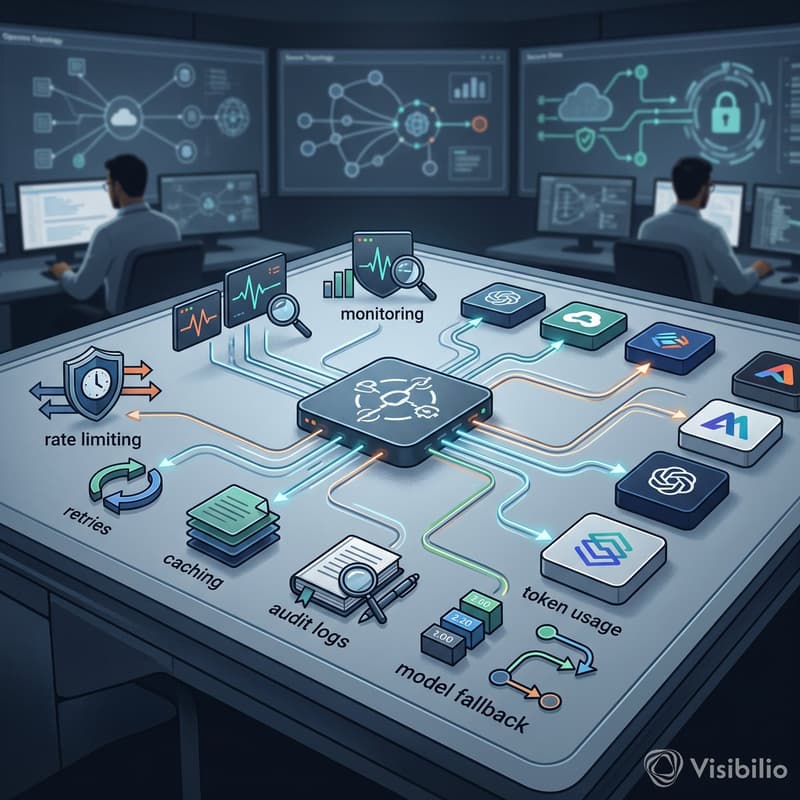
IBM's agentic AI governance playbook reinforces this: governance should shift from periodic review to runtime governance, with monitoring, policy enforcement, escalation paths, and audit mechanisms built into the system.
Based on what the data shows and what Kondevs observes in enterprise integration work, four principles hold up.
Fix the process layer first. If your workflows aren't modeled, versioned, and observable before you add agents, you're building on sand. The agent amplifies whatever process discipline (or lack of it) already exists.
Start where data already flows. ERP transactions, CRM events, EDI exchanges, ticketing queues: these are places where an agent step can deliver measurable value without requiring a new data pipeline or a governance framework from scratch.
Keep humans at decision points. Human-in-the-loop isn't a failure mode. It's a design choice. Define approval gates for high-impact actions and clear stop, rollback, and escalation paths. As Dataiku's October 2026 guidance on human-in-the-loop patterns puts it, the goal is governance by design, not governance by afterthought.
Budget governance from day one. Runtime monitoring, policy enforcement, traceability, incident response: these aren't phase-two concerns. They're the difference between a pilot that stalls and a deployment that earns trust.
One caveat worth stating plainly: the Camunda survey covers organizations with more than 1,000 employees. Mid-market firms face different constraints, smaller teams, fewer platforms, tighter budgets. The underlying lesson still applies (integration and governance are the bottlenecks to production), but the implementation path will look different. A mid-market company doesn't need a full-scale orchestration platform on day one. It needs a clear process model, one governed agent use case, and the discipline to capture evidence from the start.
The convergence of BPM and AI agents isn't a trend to watch. It's already the pattern that separates production deployments from permanent pilots. The organizations closing the gap aren't the ones with the most sophisticated models. They're the ones that treated their process layer as infrastructure, not an afterthought.